UX Research & Design · 2020
Perfecting the AliPay Funding Interface
A trust-centered redesign of AliPay fund product experiences, combining user research, usability testing, and high-fidelity interface design.
In 2021, Alipay is popular all over China. On its basis service of fast payment, Alipay gradually introduce more functions, hoping to become an online wealth management platform for all of China. However, not everyone accepts the concept.
I was part of an ambitious project to redesign the fund sector for the fastest growing payments company in history.
Team
Xin Ye, Wenmin Li, Yuqin He, Alibaba Design team.
Exhibition
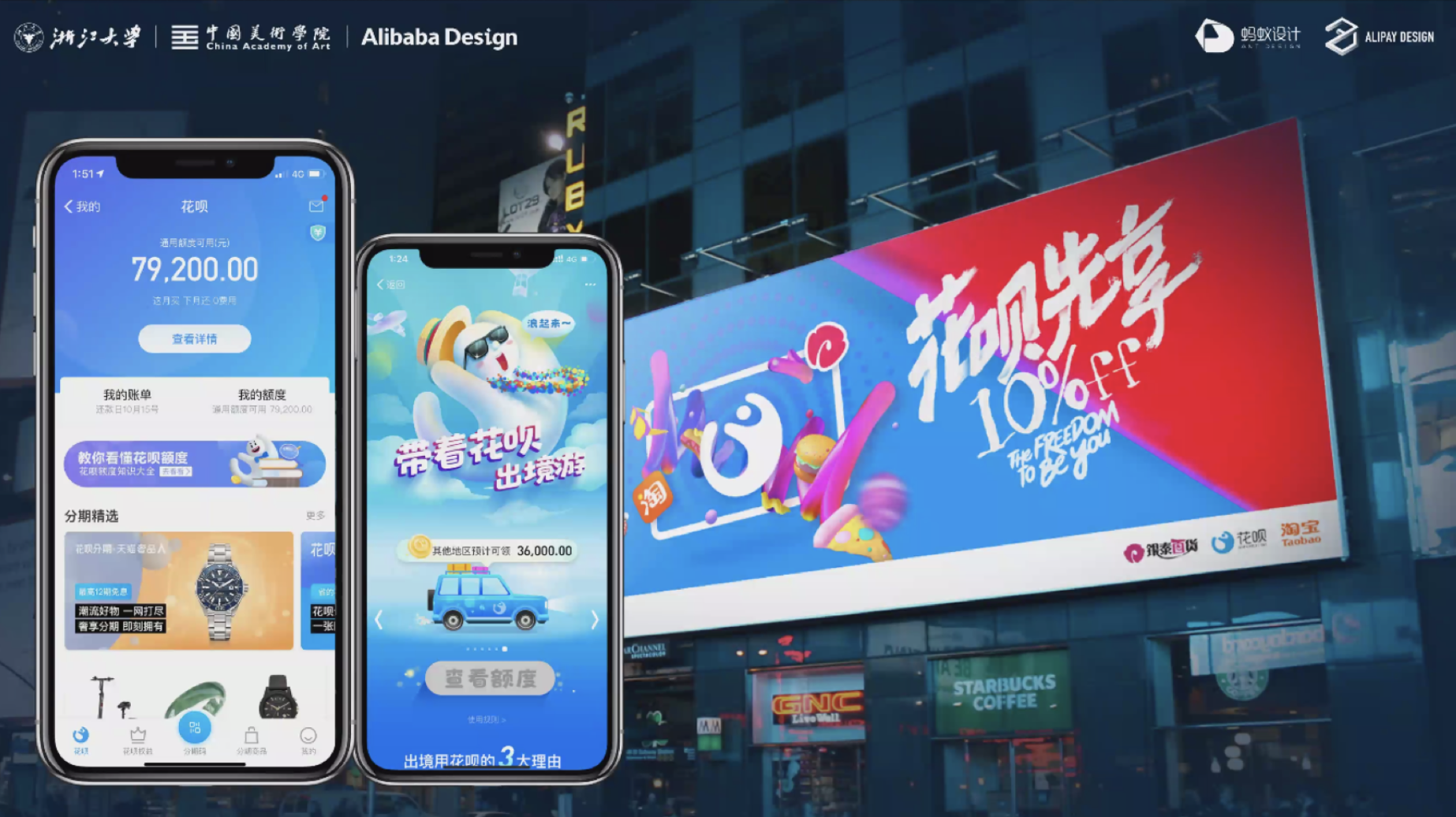
@ 2020 Alibaba Design Showcase & Competition(This project won “the Most Valuable Award” and “the First Place in the Internet Financial Management Category”.
Duration
Jan 2020 - Apr 2020 (4 mo)
Methods
Prototyping; Eye-tracking; Usability test;
THE CHALLENGE
PEOPLE ARE AFRAID TO USE FINANCIAL INSTRUMENT
The truth is that the financial industry itself needs a greater degree of trust. It is professional, it involves "money", and trust breaks down very quickly if there is a risk.
More and more Chinese people have such money concept: a lifetime without financial management, afraid of loss.
OUR GOALS
1. Discover the influence factors of trust
2. Criteria for value design of trust
3. Iterative improvement of the existing Alipay fund sector
MY ROLE
I led the research and design of the new "Fund" section of Alipay and collaborated with two other user researchers and two designers.
STEP 1 : TRUST FACTOR INSIGHT
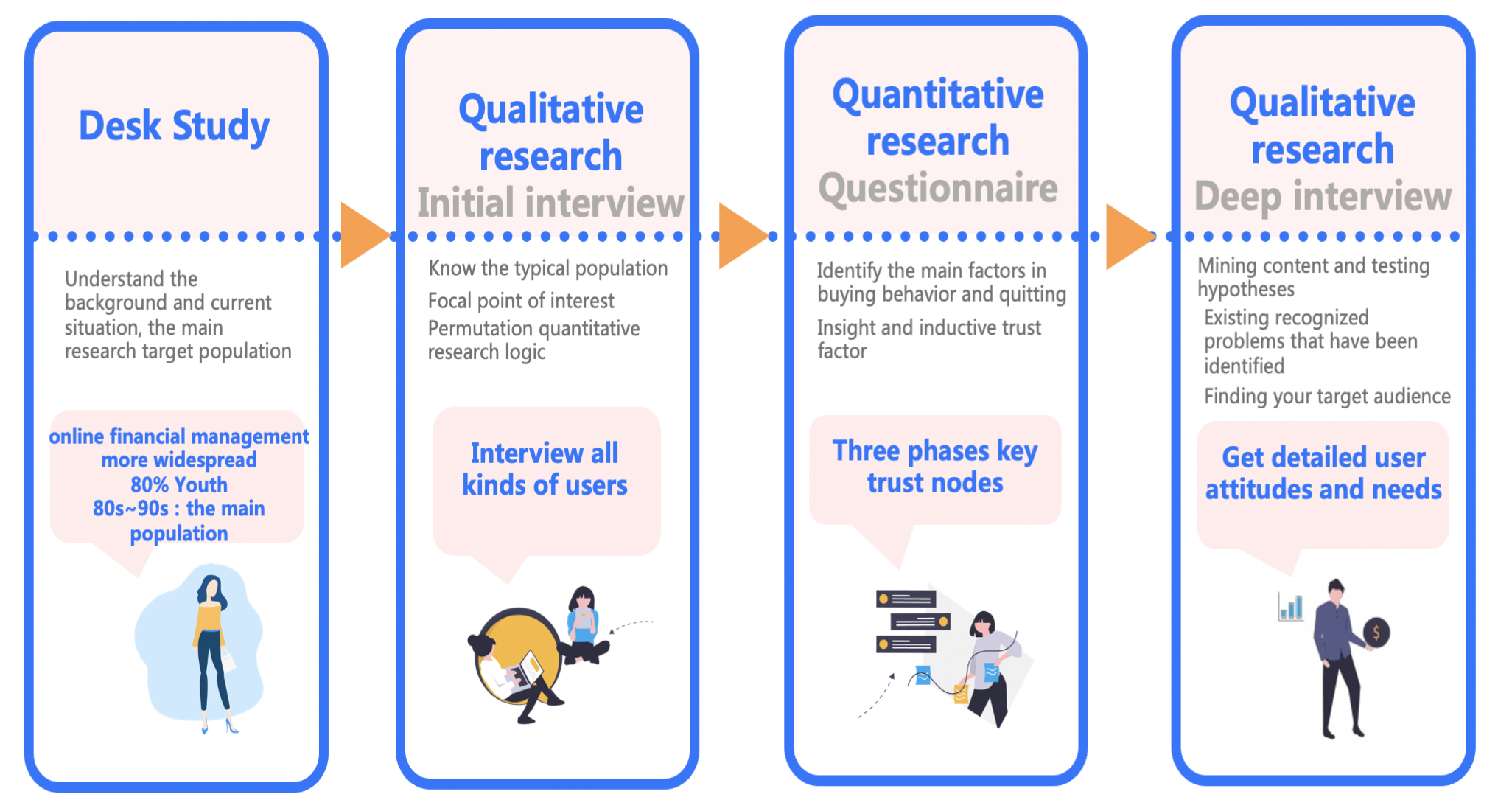
PROCEDURE
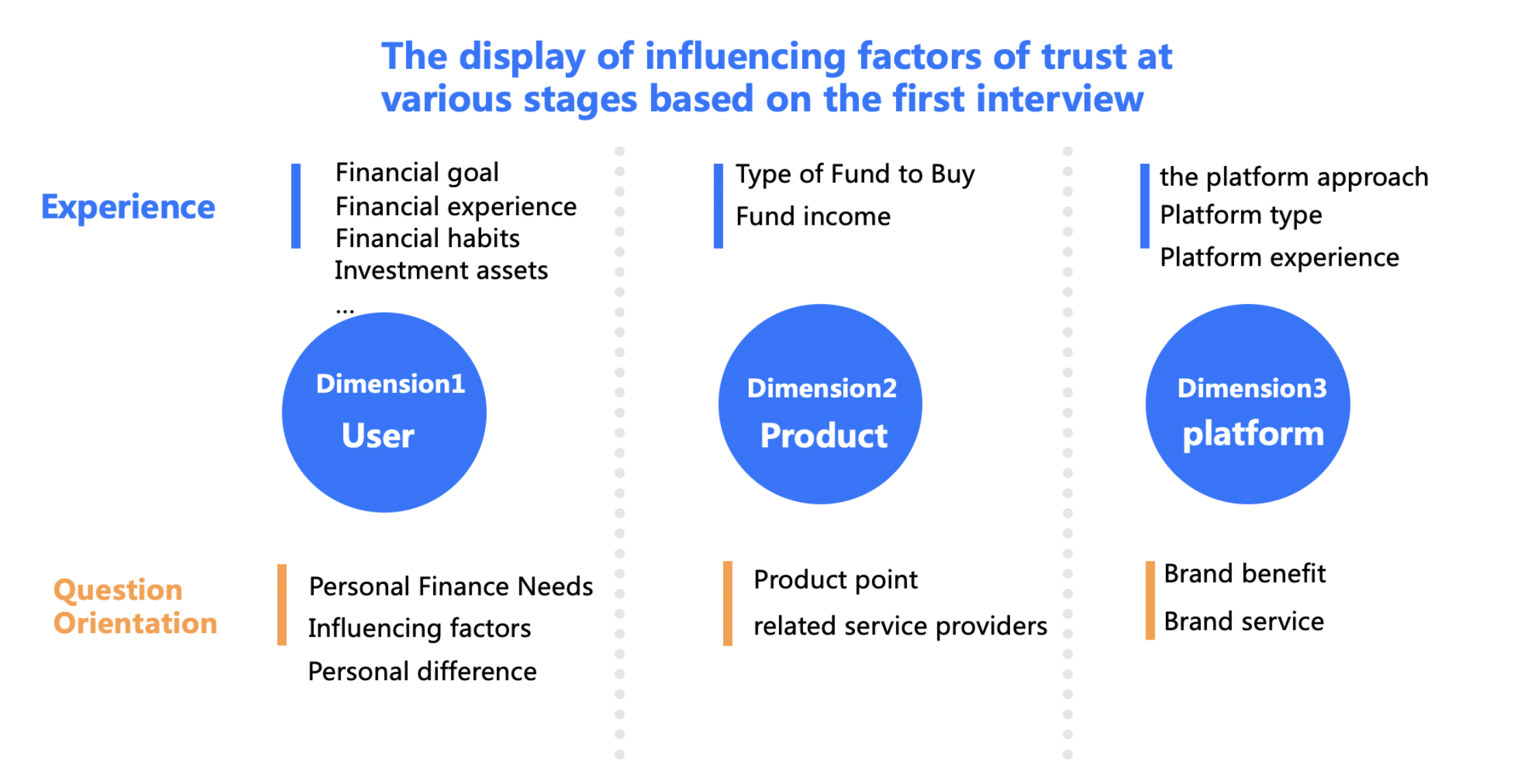
INFLUENCE FACTOR DISPLAY
DATA ANALYSIS
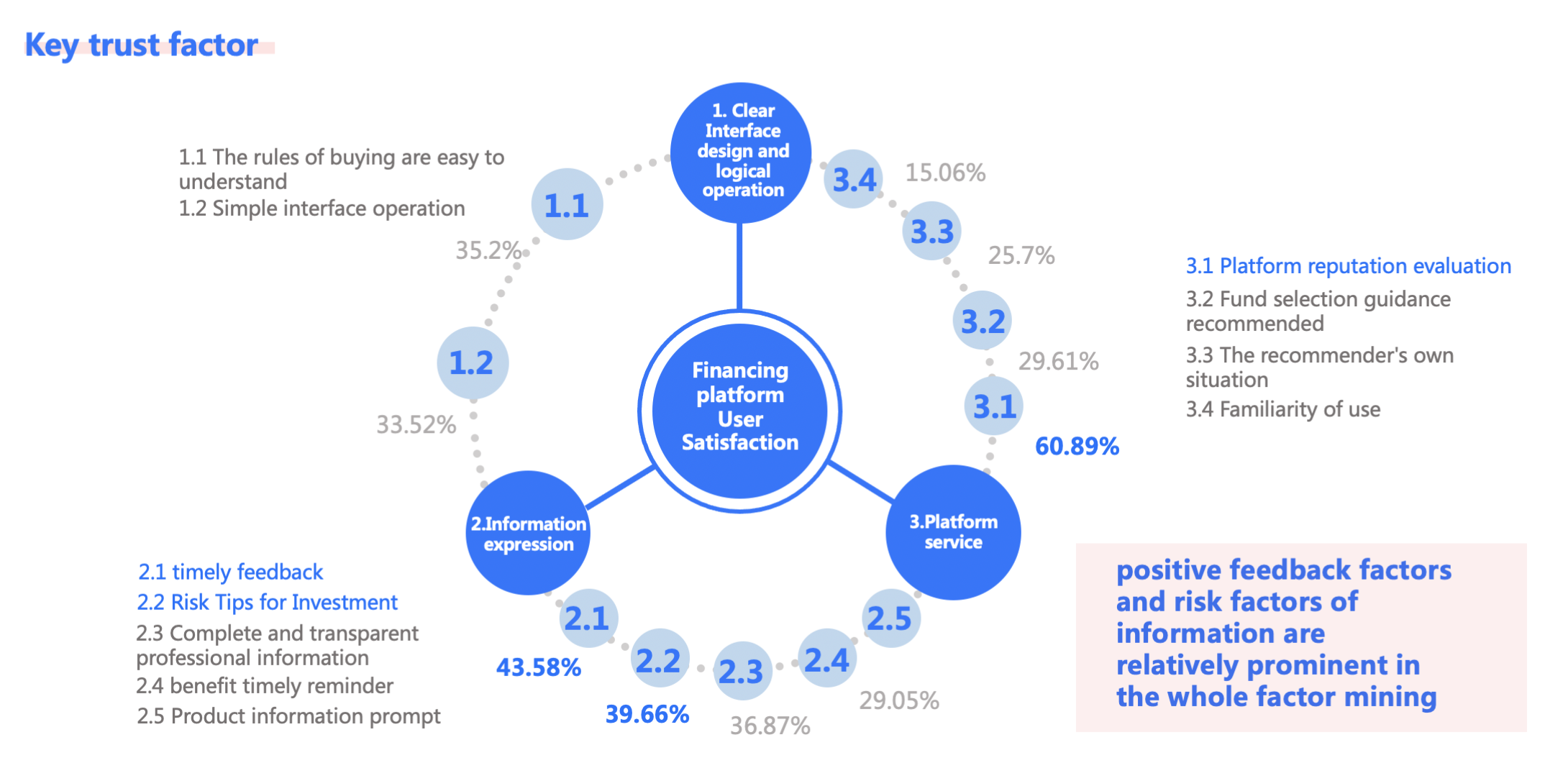
KEY TRUST NODES
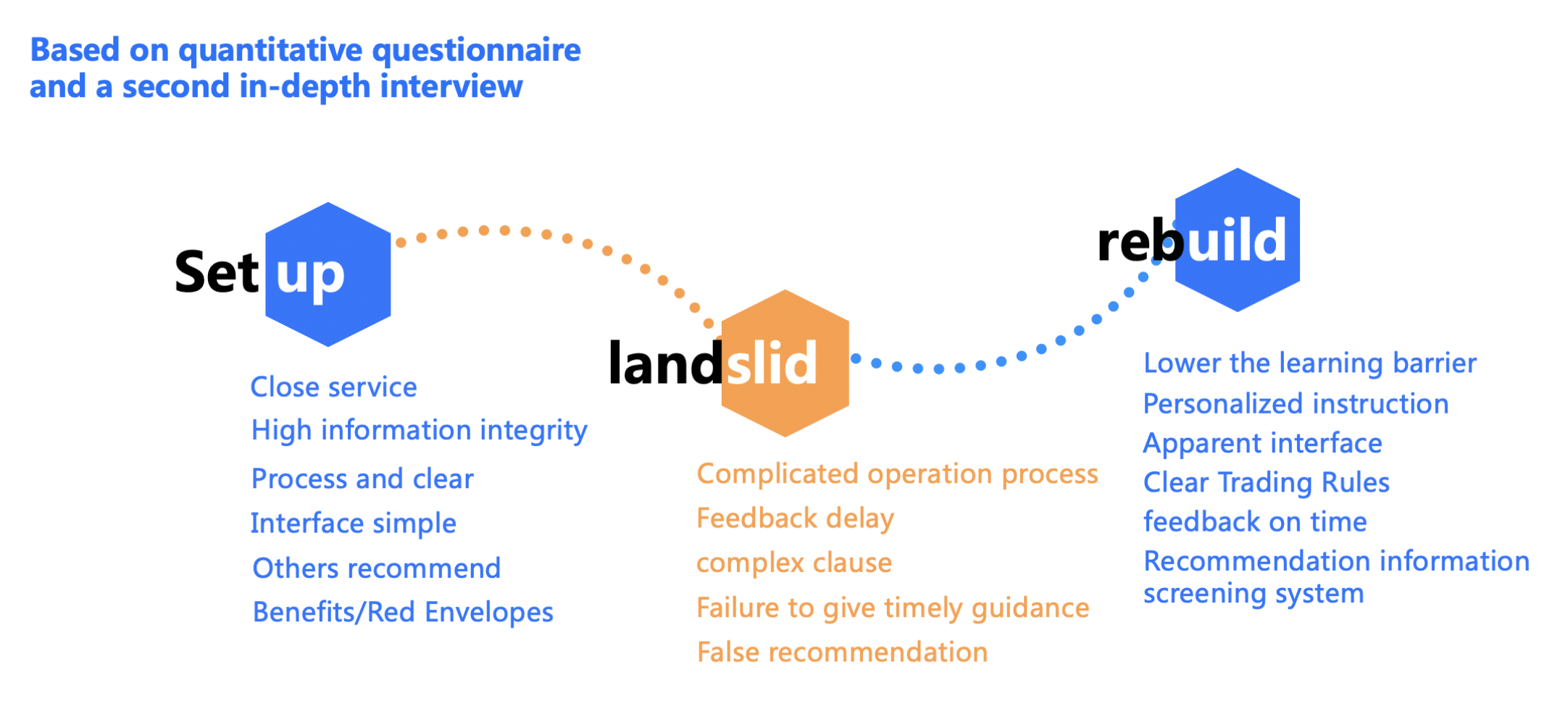
STEP 2 : EXPLORE VALUE
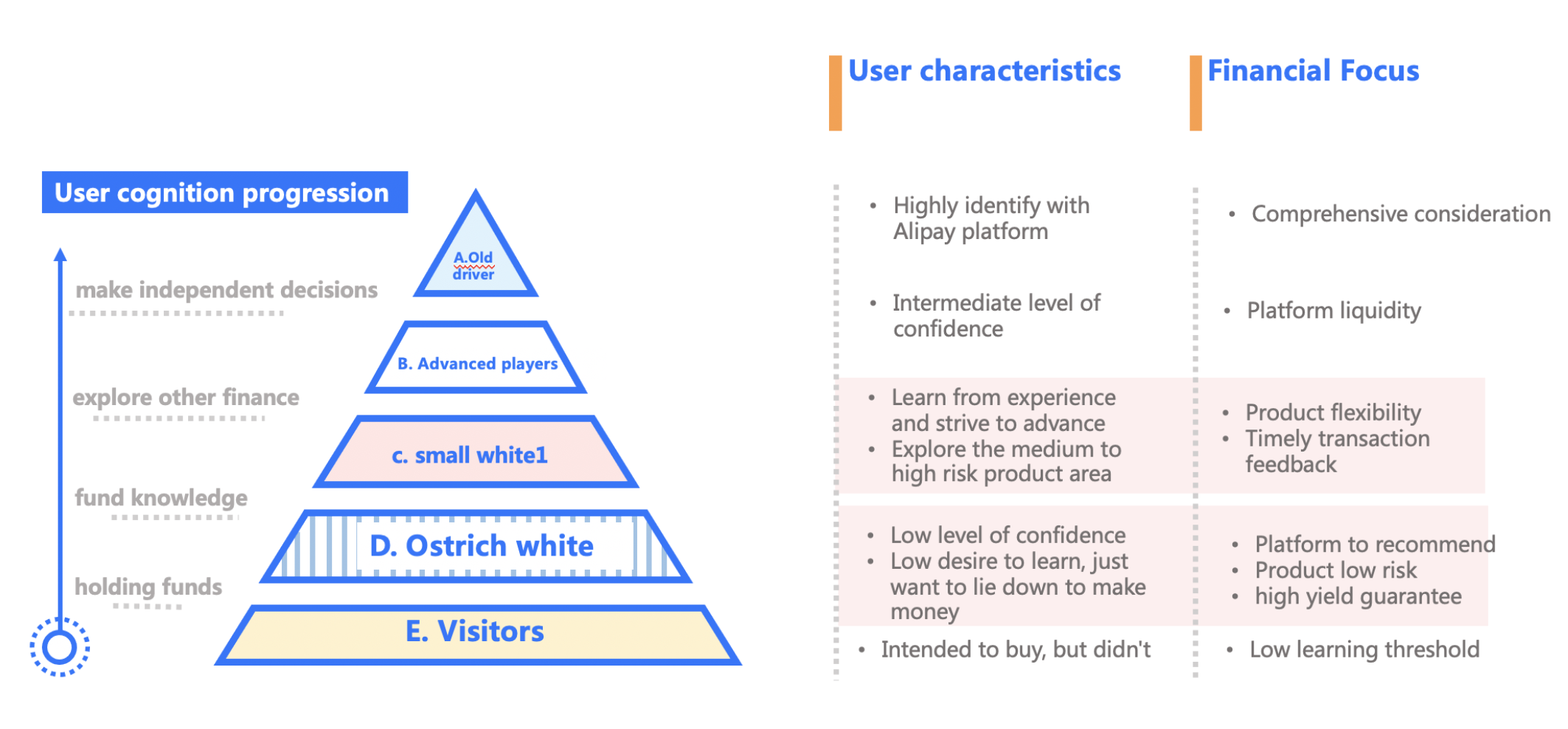
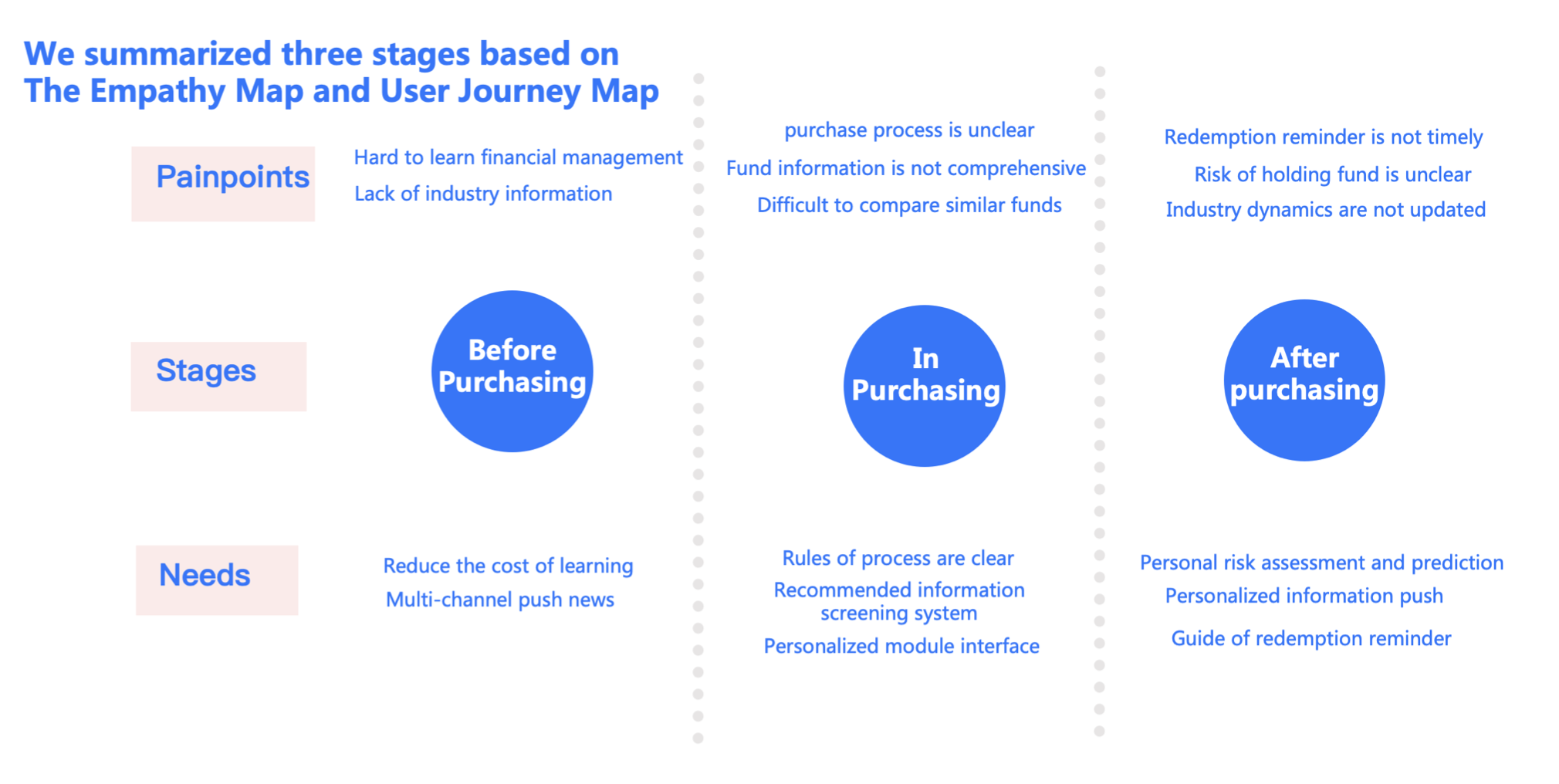
STAGE PEOPLE INDUCTION
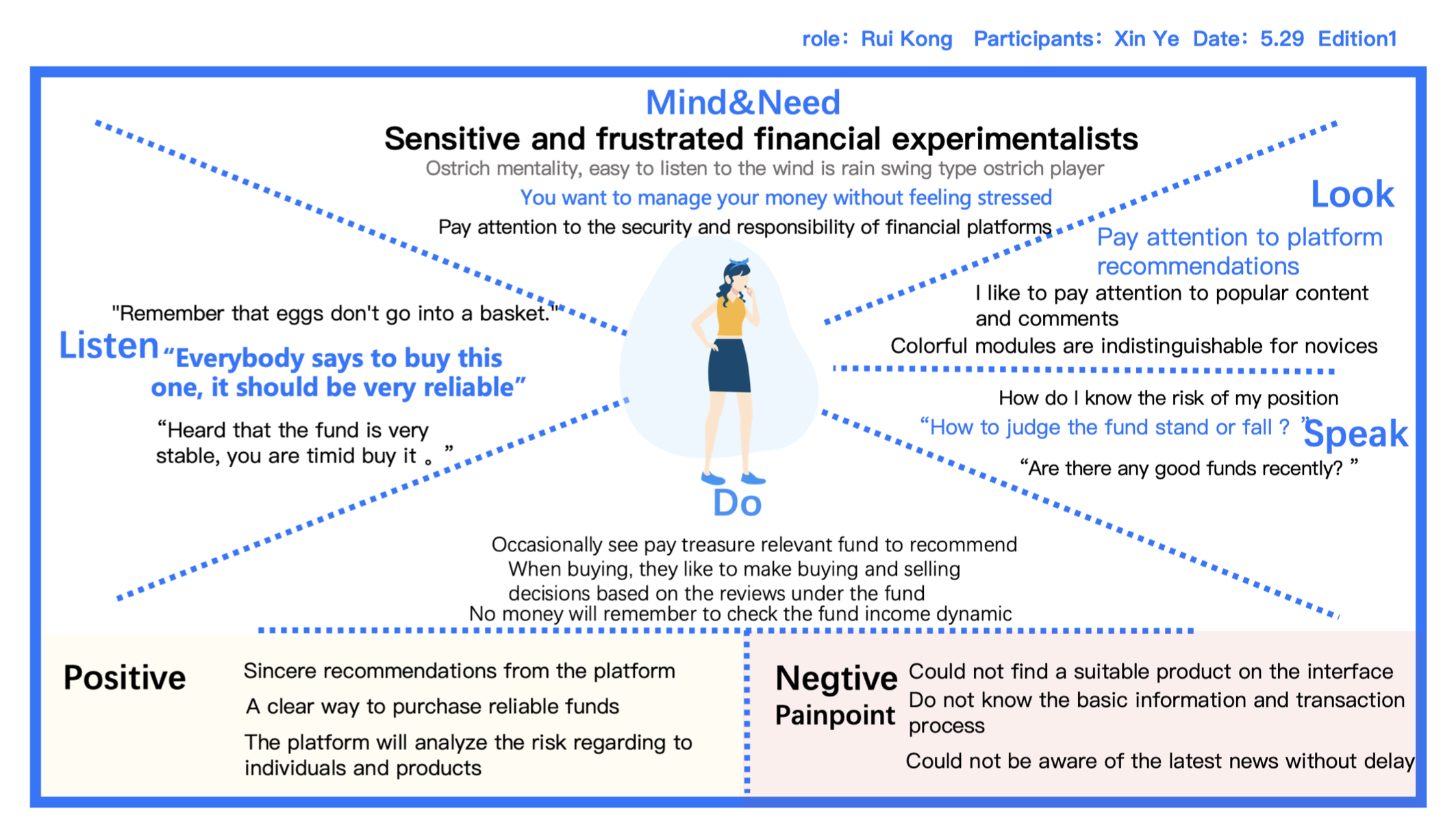
EMPATHY MAP
SUMMARY OF USER PAINPOINTS AND NEEDS
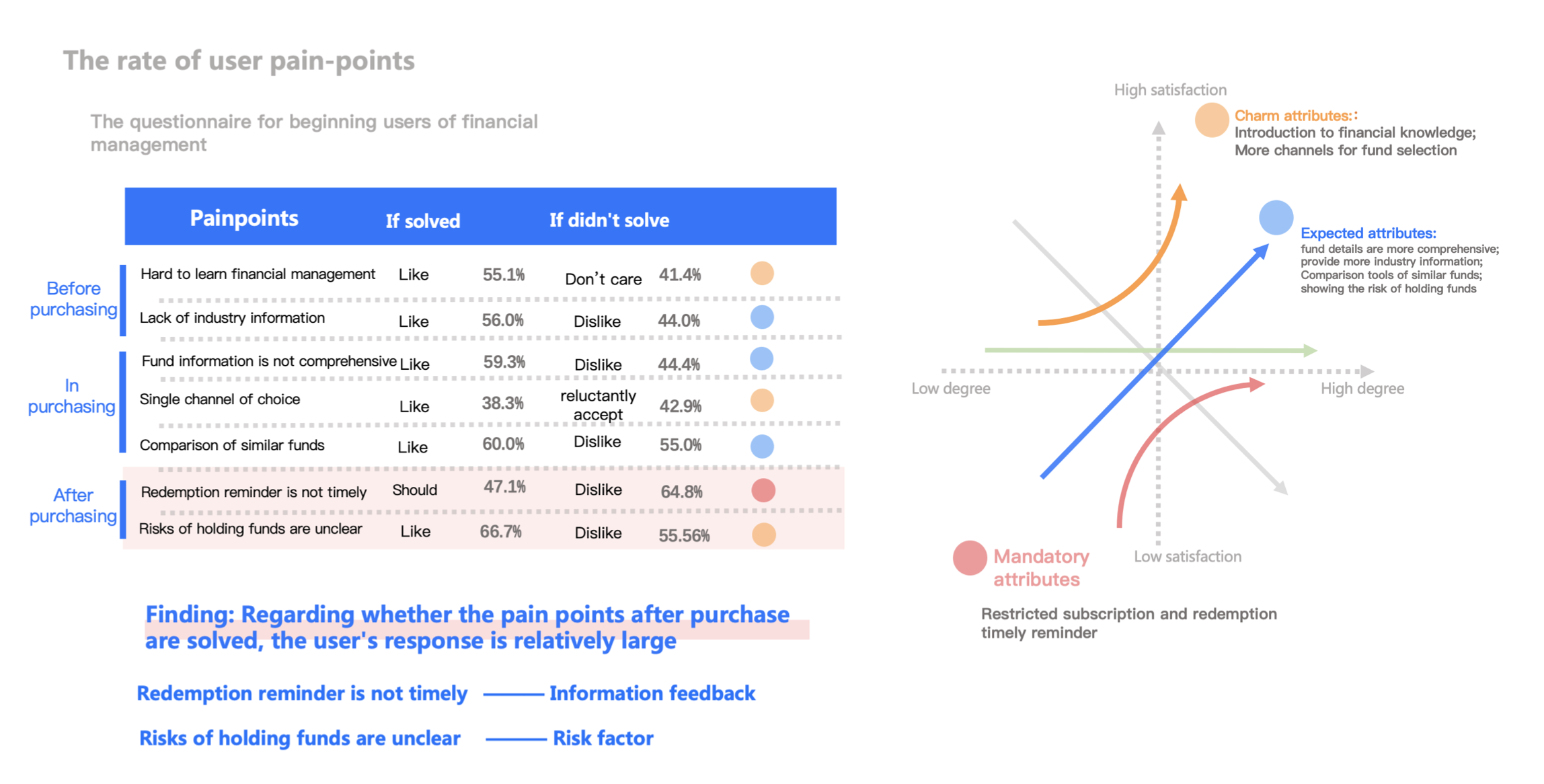
KANO MODEL
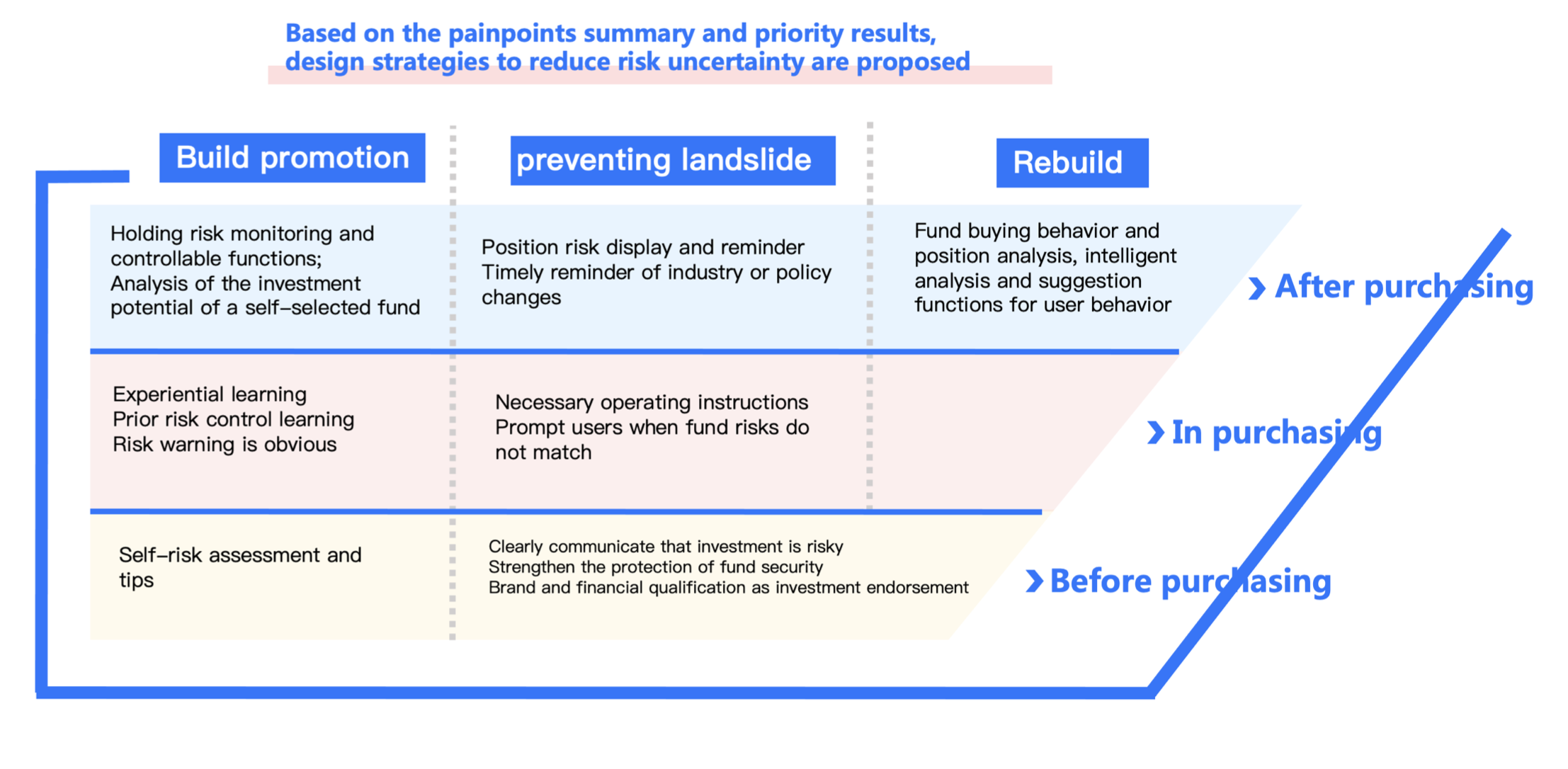
RECOMMENDATIONS FOR TRUST DESIGN
STEP 3 : CONCEPTUAL OUTPUT-FIRST GENERATION
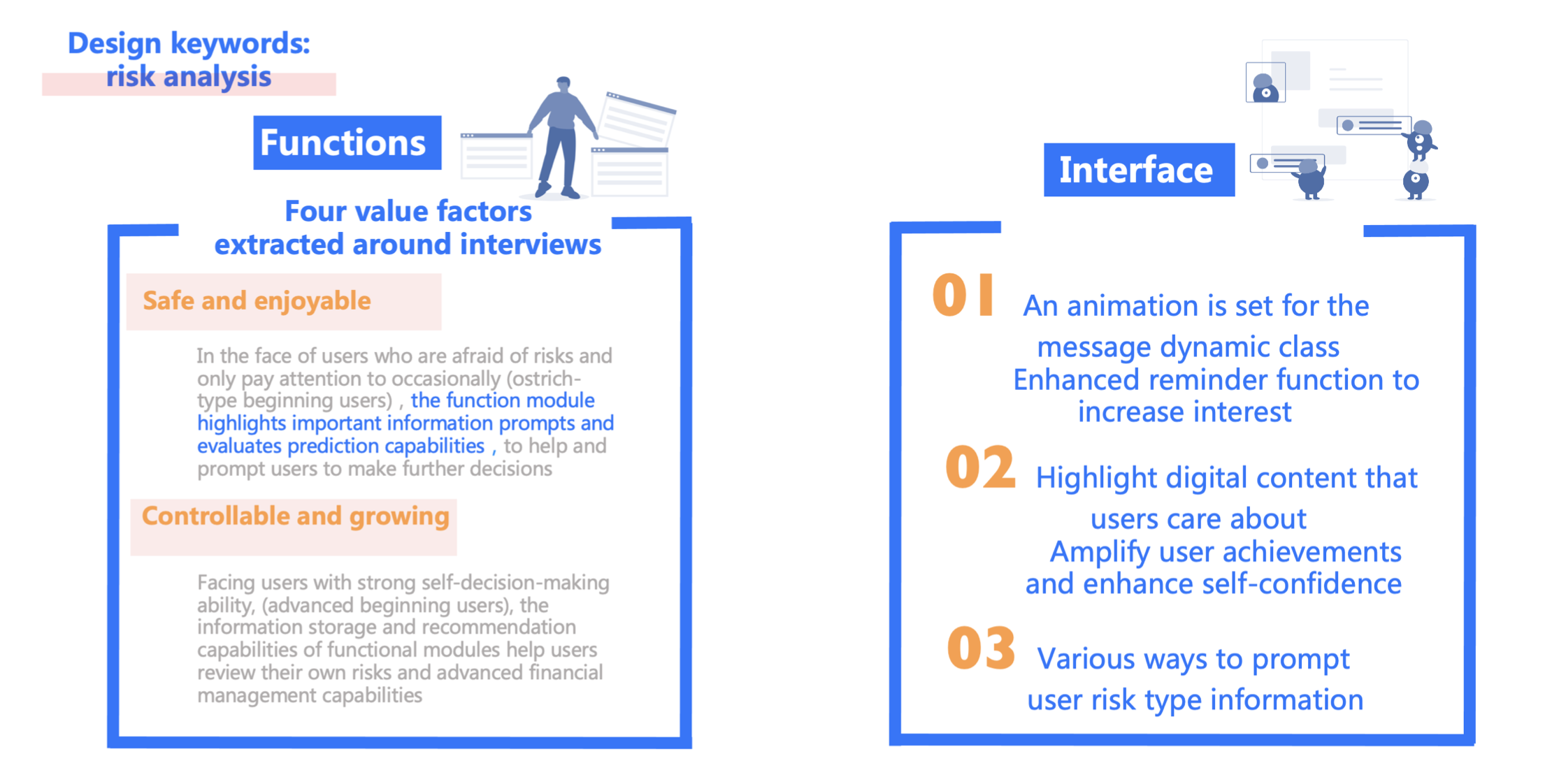
IDEAS AND DESIGN KEYWORDS
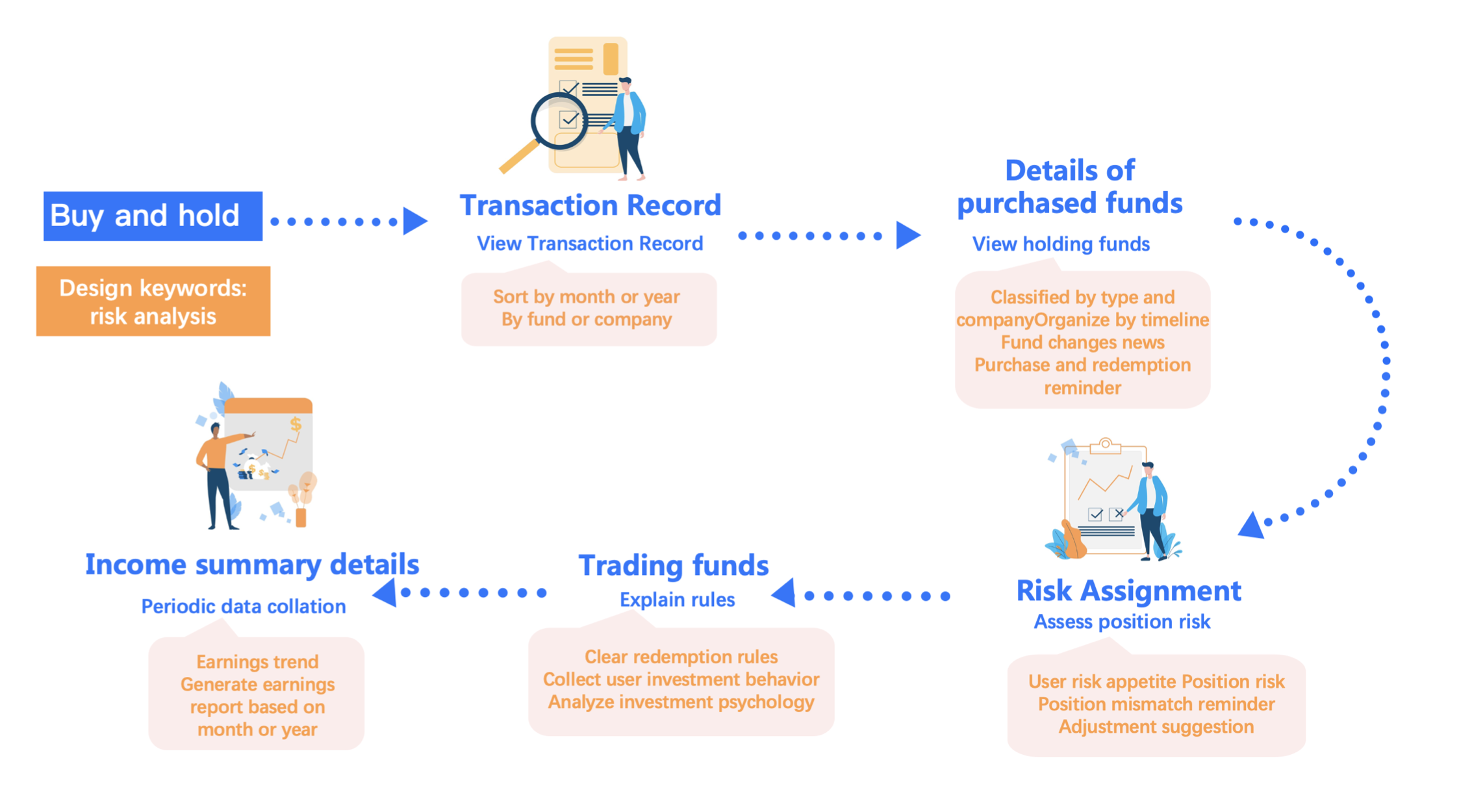
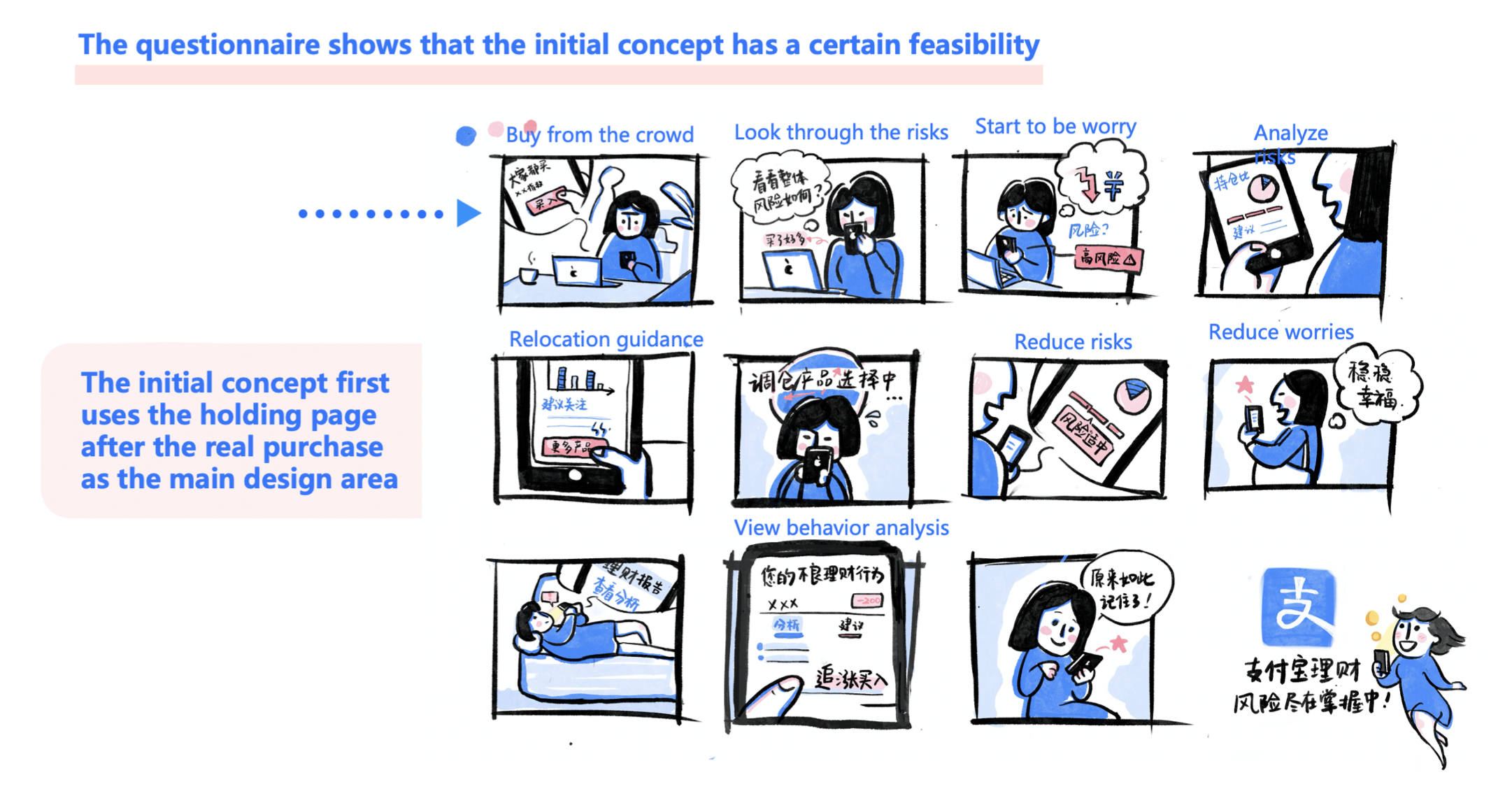
CONCEPT STORYBOARD (FIRST EDITION)
FUNCTION AND INTERFACE DESIGN POINTS
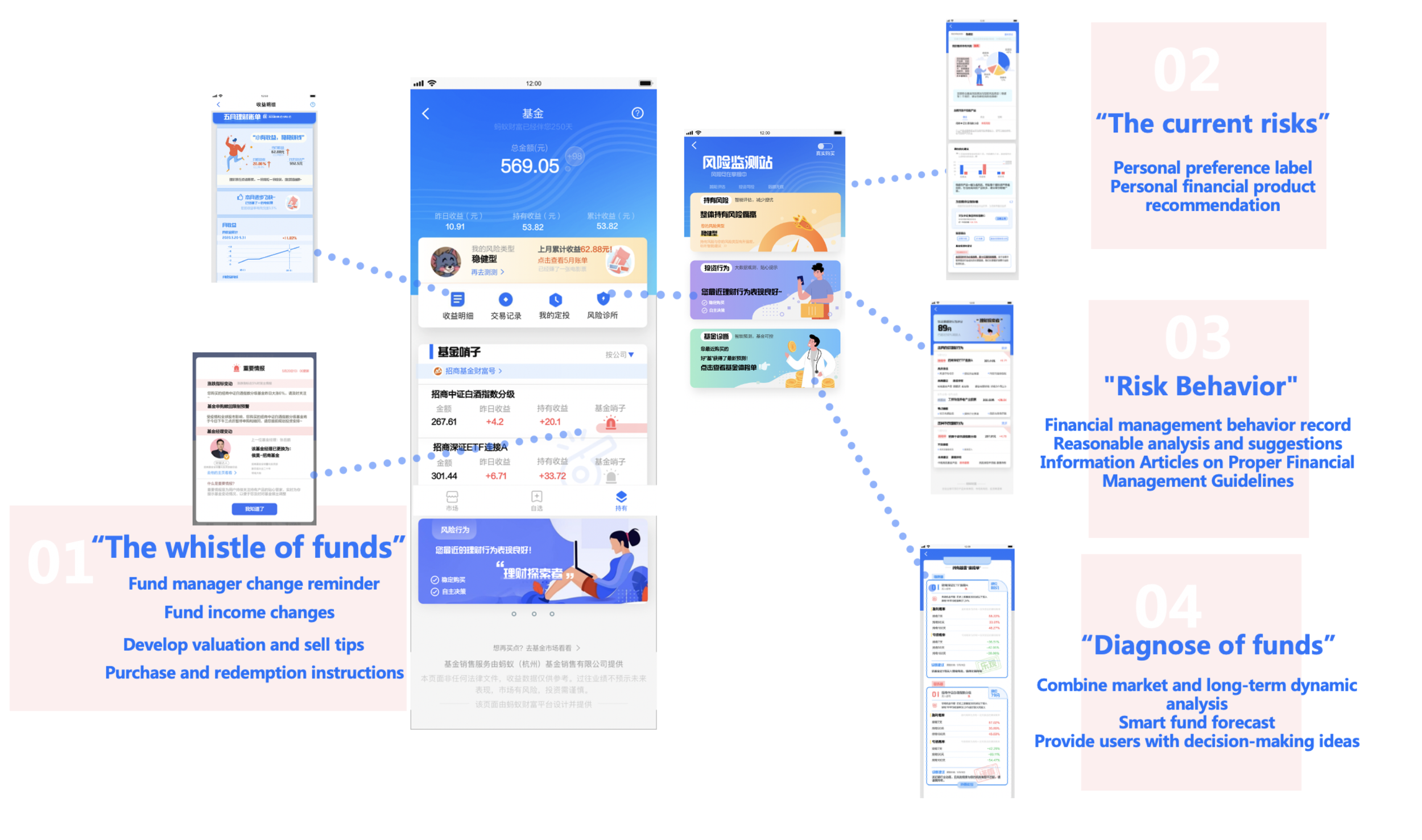
FIRST-GENERATION CONCEPT HIGH-FIDELITY INTERFACE
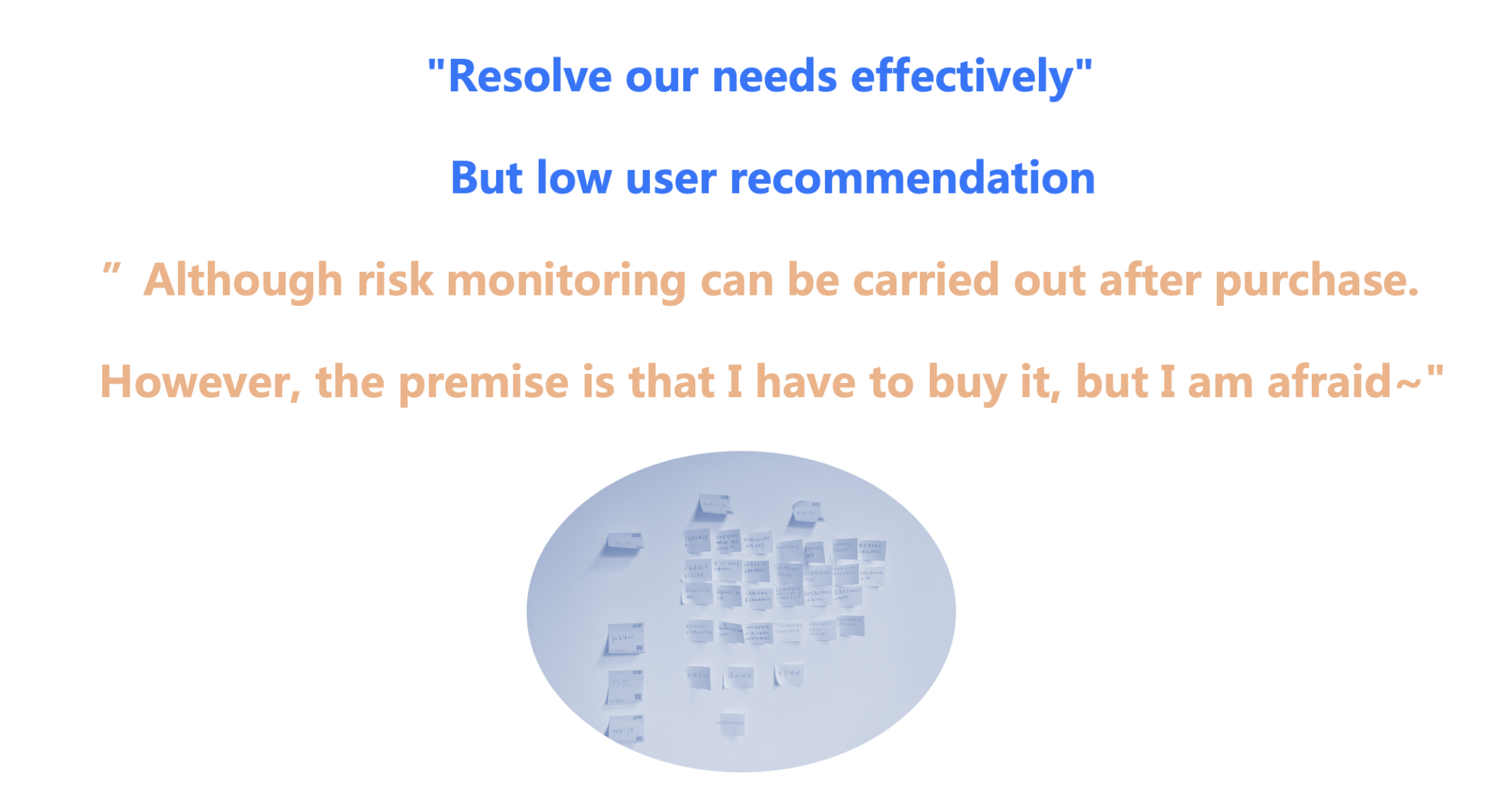
AFTER THE FIRST GENERATION CONCEPT USABILITY TEST
STRATEGY DIVERGENCE
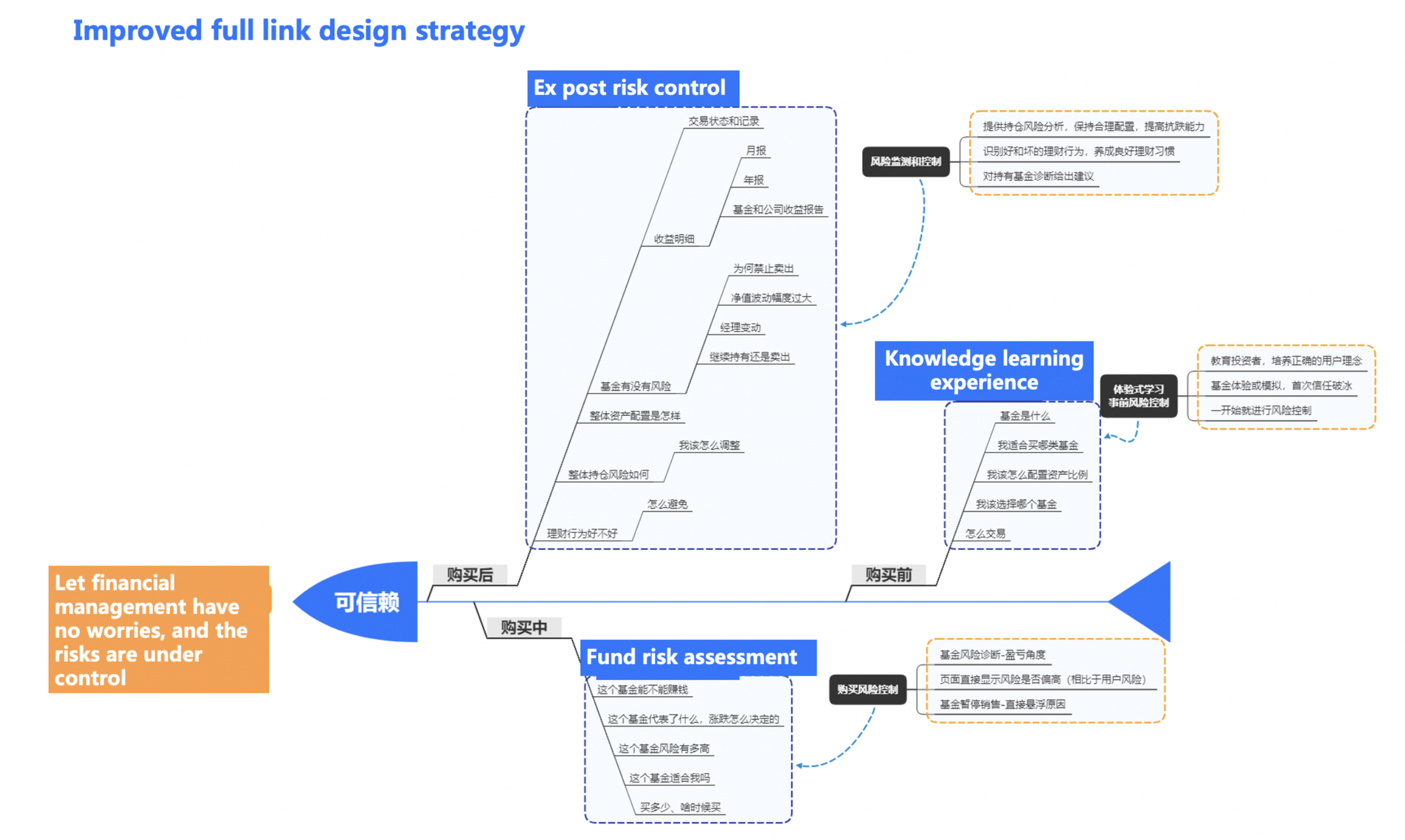
CONCEPTUAL OUTPUT: ITERATION
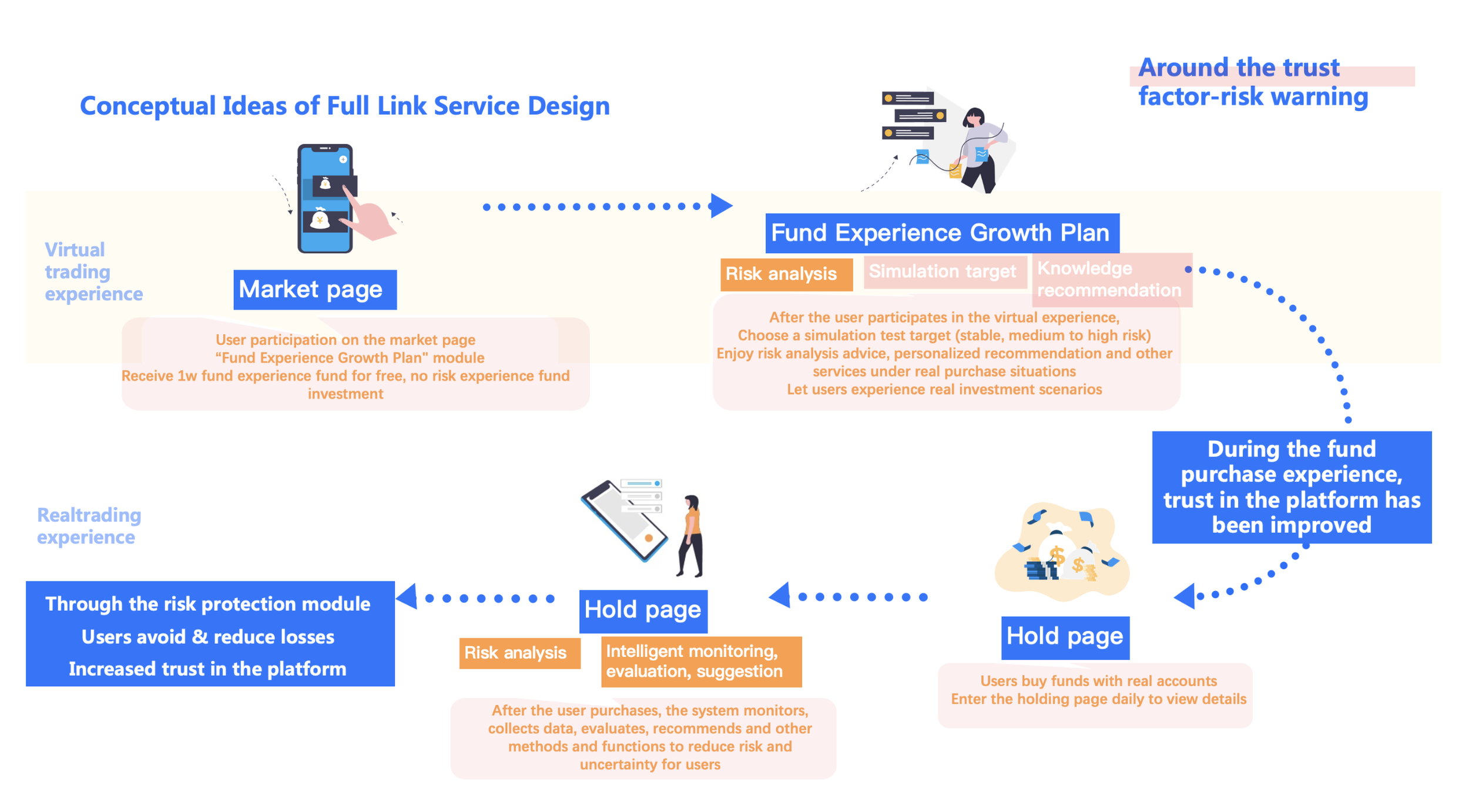
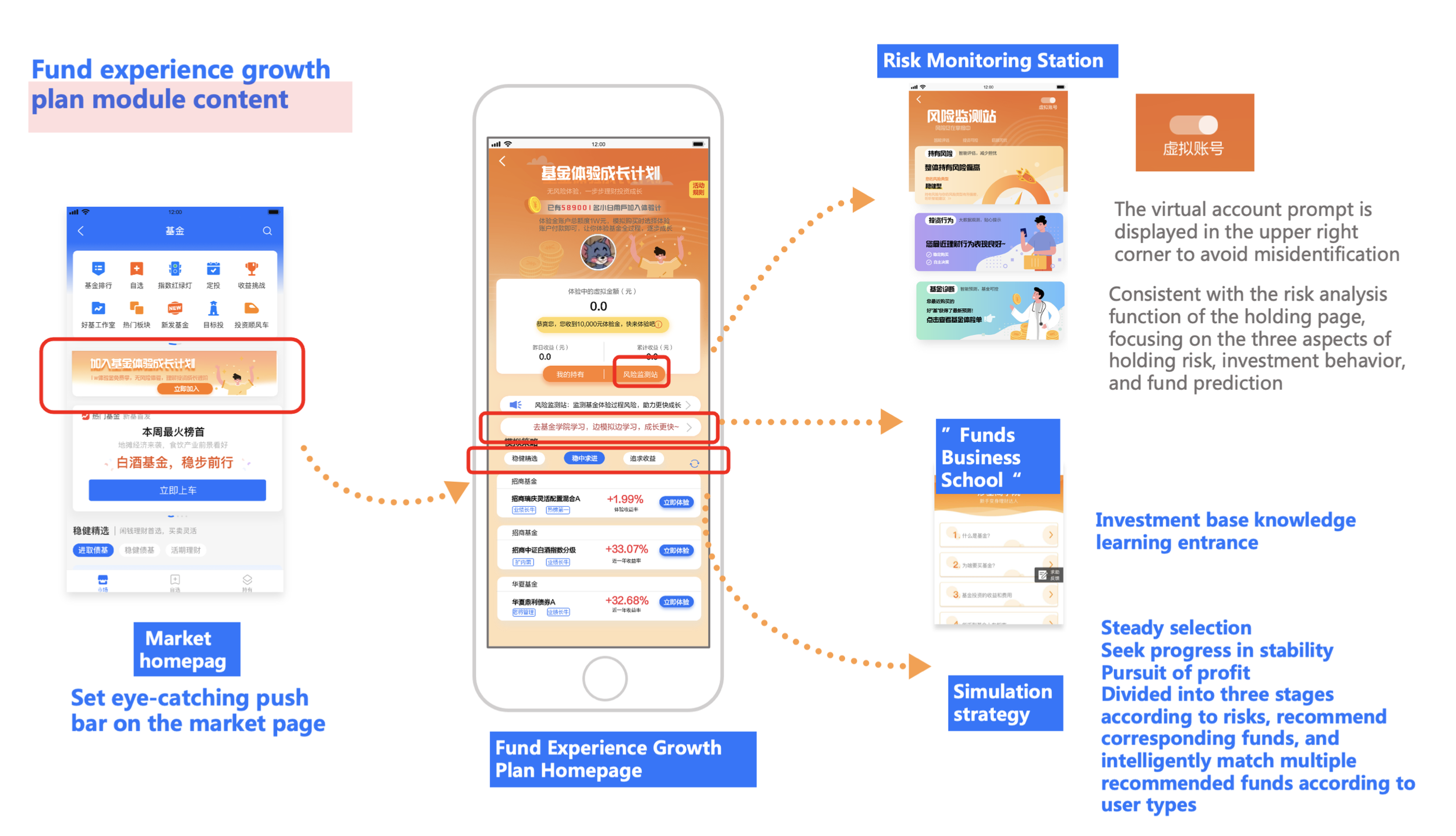
CONCEPT PROTOTYPE
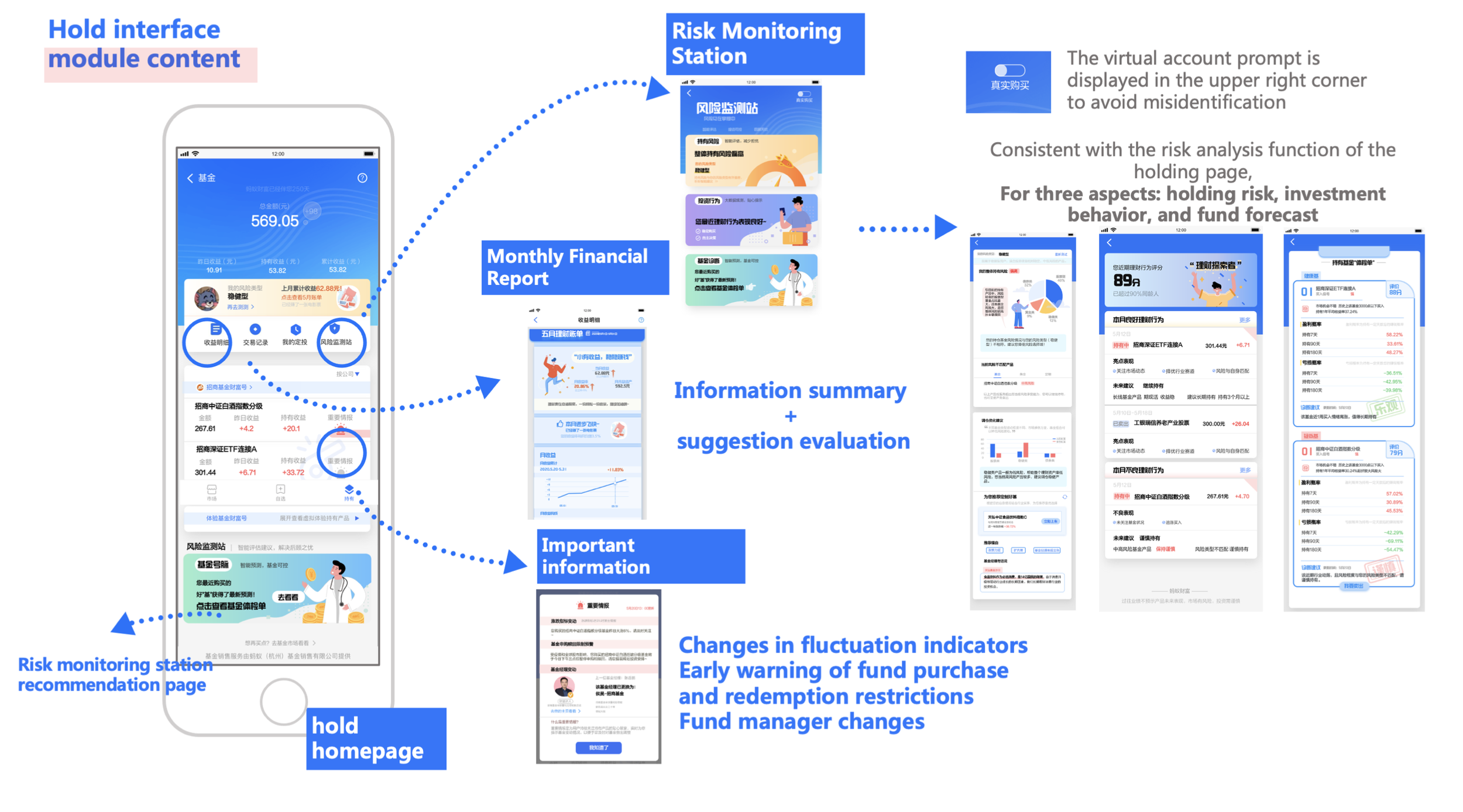
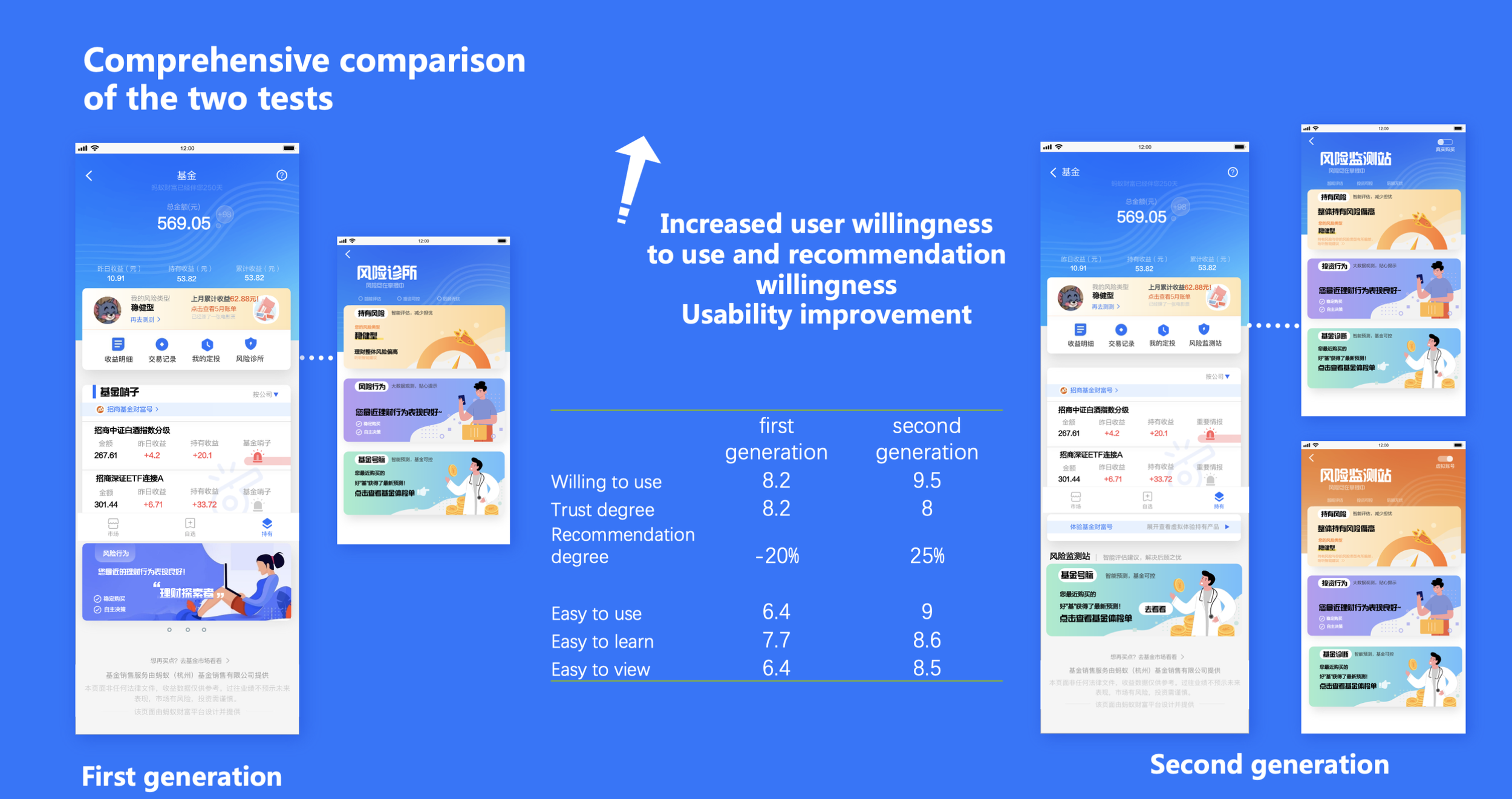
AFTER DOUBLE USABILITY TEST